
The short answer
PEGI is a Europe-wide age rating for games that tells you the youngest age a game's content is considered suitable for, using a small number of icons to say why, such as violence or gambling-like features; it is not a measure of how hard a game is to play or how well made it is.
What the evidence says
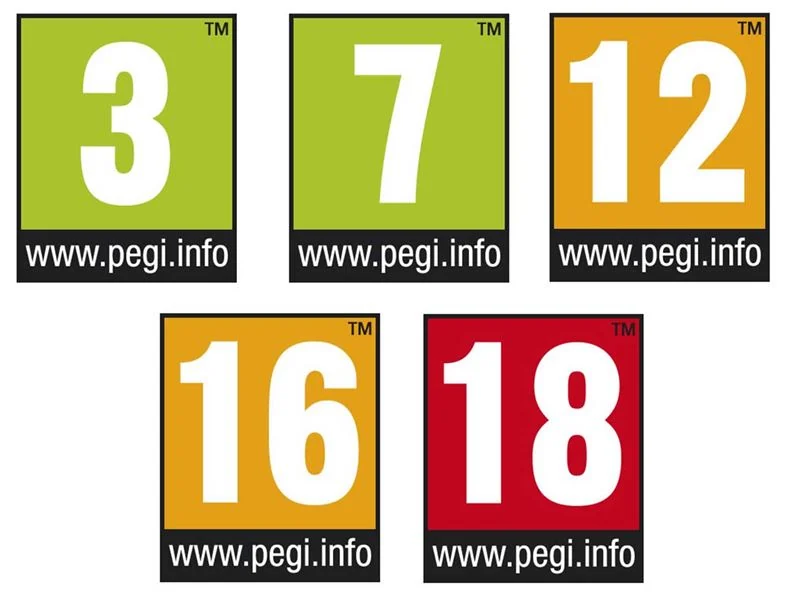
Pan European Game Information, known as PEGI, was launched in the spring of 2003, as recorded on PEGI's own account of the system's origins, which states it was created by the Interactive Software Federation of Europe and is now run day to day by PEGI s.a., "an independent, not-for-profit company with a social purpose established under Belgian law." According to PEGI's explanation of its labels, the system uses five age categories, 3, 7, 12, 16 and 18, alongside content descriptor icons for violence, bad language, fear, gambling, sexual content, drugs, discrimination and, for some titles, in-game purchases and pressure-to-play mechanics. The process differs by route: PEGI's description of how it rates games explains that, for physical products, a publisher completes a content questionnaire and gets a provisional rating that administrators, NICAM for the youngest categories and the UK's Games Rating Authority for ages 12 and above, review before a licence issues, while digital storefront titles are rated instantly through a shared questionnaire, with a sample checked afterwards using keyword searches and consumer reports.
For context
PEGI's materials are explicit that the age number addresses content suitability, not difficulty: a PEGI 3 game can be too hard for a young child despite suitable content, and a PEGI 18 game can be simple to play despite adult content, so the label answers a narrower question than overall fit. The two routes, pre-release questionnaire with human review, and faster shared-questionnaire digital assessment, mean the scrutiny behind a rating is not visible from the label. Ratings are also self-reported by the publisher first, then checked rather than independently tested from scratch, a normal model at this scale but different from a regulator playing every game before rating it.
A practical next step
Rather than relying on the age number alone, you could check the specific content descriptor icons for a game your child wants, since those tell you what the rating is actually responding to, which matters more for an individual family's decision than the headline age.
- Which specific content descriptor triggered this rating, and is that the aspect I am actually concerned about?
- Is a PEGI 3 or 7 game still a good fit if difficulty, rather than content, is the issue for my child?
- Was this title rated through the fuller pre-release process or the faster digital storefront route?
PEGI gives a consistent, Europe-wide starting point for a content conversation, but it answers a specific and limited question, so pairing the age number with its content descriptors, and with your own sense of what a particular child can handle, gives a more useful picture than the number alone.
Sources & reading trail
Sets out the five PEGI age categories and the content descriptor icons used to explain a rating.
Source published: Not established · Retrieved: 16 September 2026
Describes the two rating processes, for physical products and for digital storefronts, and the administrators involved.
Source published: Not established · Retrieved: 16 September 2026
States PEGI was launched in spring 2003 by the Interactive Software Federation of Europe and is administered by PEGI s.a.
Source published: Not established · Retrieved: 16 September 2026
Studies and official documents establish the record; the short answer and the next step are Screens & Childhood editorial interpretation. This retrospective draft does not imply the site published on the event date.