
The short answer
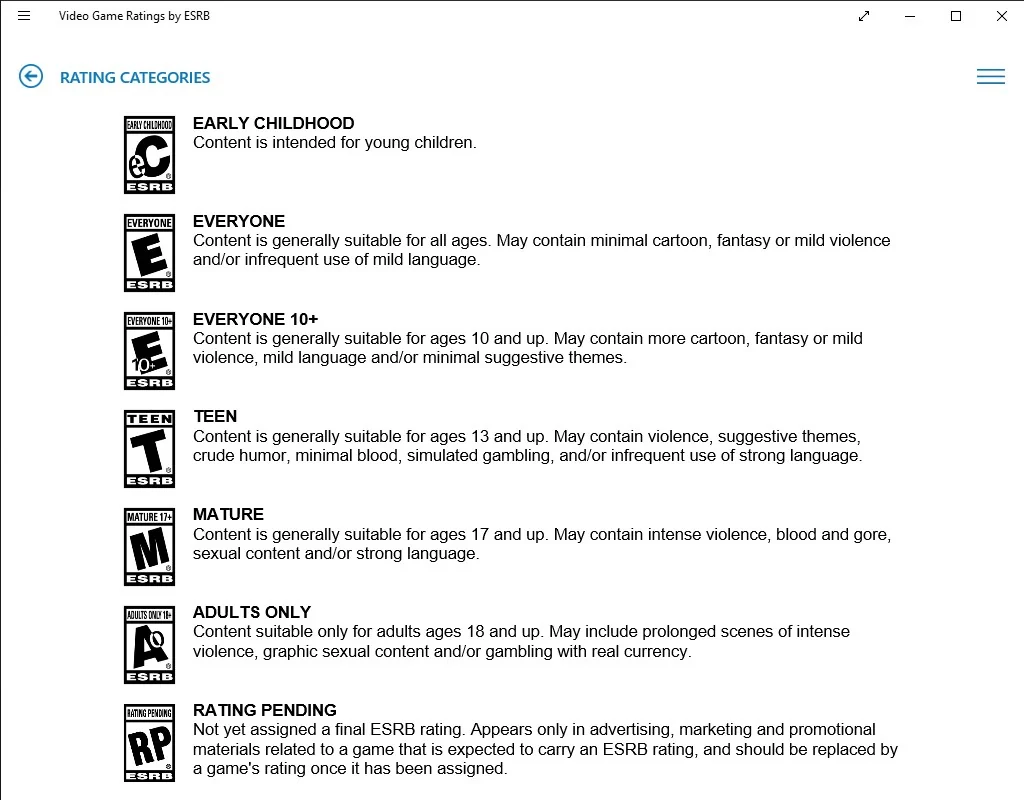
An ESRB rating describes what a game's own designers built into it, such as violence, language, sexual content or gambling themes, sorted into an age category. It does not, by the rating board's own description, describe what happens once a game connects to other players, allows in-game purchases, or exposes a child to content other users have posted.
What the evidence says
The Entertainment Software Rating Board states, on its history page, that it was founded by the Interactive Digital Software Association in 1994, introducing an original system of five rating categories and seventeen content descriptors; the organisation's name changed to the Entertainment Software Association in 2004. Its about page, current as retrieved on 16 September 2026, states the system was established with the help of child development and academic experts, with the goal of helping parents make informed choices about the games their families play.
The current mechanics are set out in ESRB's ratings guide, also retrieved on 16 September 2026, which describes six age-based categories from Everyone to Adults Only, alongside Content Descriptors that flag specific material and are, in the guide's own words, 'applied relative to the Rating Category assigned and are not intended to be a complete listing of content'. A third element, Interactive Elements, was added to the system in 2012 according to the history page, and the ratings guide states these elements 'do not influence the rating assignment of a product'. They instead flag in-game purchases with real money, the possibility of unfiltered or uncensored user-generated content through interaction features, location sharing, and unrestricted internet access.
For context
Separating content from interactivity is a deliberate design of the system, not an oversight the guide is confessing to. A ten-year-old game and a live-service game updated weekly can carry the same age category while differing enormously in what a child might encounter online, because the rating reflects the base content reviewed at the time, and the Interactive Elements label, where present, is a separate flag rather than a modifier to the category itself.
A practical next step
Before treating an age category as the whole answer, you could check a specific title's Interactive Elements labels on the ESRB site, since that is where purchases, user content and online features are actually recorded.
- Does the game your child wants carry any Interactive Elements labels, and have you read what they cover?
- Has the game changed significantly since its rating was assigned, through updates or new online modes?
- Would you treat an E-rated game with open user chat differently from an E-rated game without it?
The rating category answers one question well: what content is in the box. The Interactive Elements label, when a family reads it, answers a different one: what the box connects to. Both are on the same page, but only one of them is the age number most people repeat.
Sources & reading trail
States ESRB was founded in 1994 by the Interactive Digital Software Association with an original five categories and seventeen descriptors, and that Interactive Elements were added in 2012.
Source published: Not established · Retrieved: 16 September 2026
Living documentation defining the six rating categories and stating Interactive Elements, covering purchases, user content, location and internet access, do not influence the rating.
Source published: Not established · Retrieved: 16 September 2026
States the rating system was developed with child development and academic experts to help parents make informed choices.
Source published: Not established · Retrieved: 16 September 2026
Studies and official documents establish the record; the short answer and the next step are Screens & Childhood editorial interpretation. This retrospective draft does not imply the site published on the event date.