
The short answer
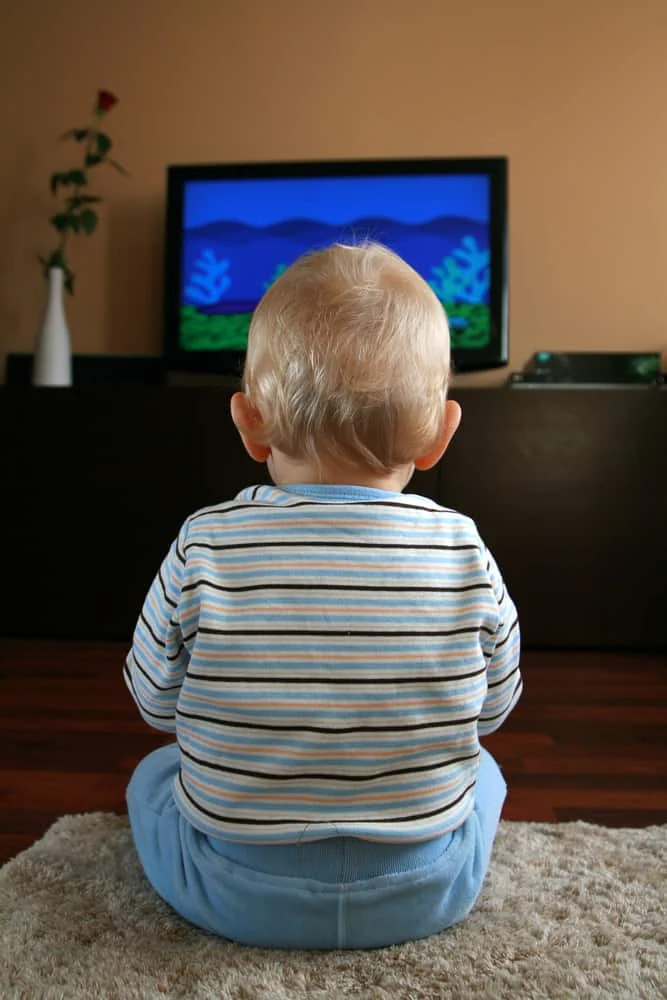
An adult television programme playing in the background, one a young child barely glances at, still shortens how long that child stays engaged with their toys and reduces how much a parent talks and plays with them. The effect does not depend on the child watching the screen; it shows up even when they almost never do.
What the evidence says
In a study published in Child Development in July 2008, The Effects of Background Television on the Toy Play Behavior of Very Young Children, Marie Evans Schmidt and colleagues observed fifty children aged twelve, twenty-four and thirty-six months playing with toys for an hour, with an adult game show playing in the background for half of that time and the television off for the other half. The children looked at the screen only a few seconds at a time and less than once a minute on average, yet background television still "significantly reduced" both toy play episode length and focused attention during play, according to the study's own summary. A related study the following year, The Impact of Background Television on Parent-Child Interaction, observed fifty-one toddlers and their parents under the same alternating design and found that both the amount and the quality of parent-child interaction fell while the television was on in the background.
For context
Because both studies used a within-child, alternating design rather than comparing different families, each child effectively served as their own comparison, a stronger basis for inferring an effect of the television itself than a survey comparing households that leave the television on more or less. Even so, both studies used one specific kind of adult content, a game show, over a single hour in an unfamiliar setting; they show a background-television effect under those conditions rather than a general finding about every programme, room or family routine. The researchers describe implications for later cognitive development, but neither study measured children's development over time.
A practical next step
Since the effect showed up regardless of whether the child seemed to be watching, it may be more useful to think about a television left on in the background as competing for a room's attention generally, rather than judging it only by whether a specific child looks at the screen.
- Is a television or other screen running in a room where a young child is playing, even if no one is watching it?
- Does turning it off change how long this child stays engaged with one activity?
- Does background media change how much a caregiver in the room talks with the child?
Neither study says a background programme causes lasting harm; together they show that an adult show nobody in the room is really watching can still measurably change how a young child plays and how an adult nearby interacts with them.
Sources & reading trail
Experimental design (50 children, alternating TV-on/off toy play) and the finding that background TV reduced play episode length and focused attention.
Source published: 1 July 2008 · Retrieved: 16 September 2026
Companion 2009 study finding reduced quantity and quality of parent-child interaction during background television.
Source published: 1 September 2009 · Retrieved: 16 September 2026
Studies and official documents establish the record; the short answer and the next step are Screens & Childhood editorial interpretation. This retrospective draft does not imply the site published on the event date.