
The short answer
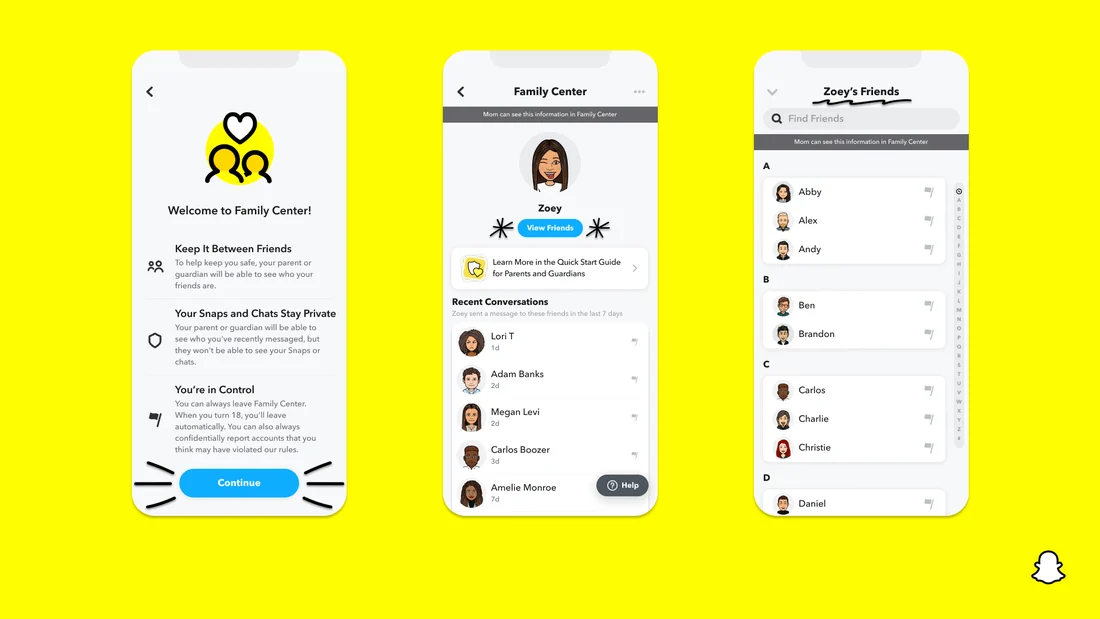
Family Center lets a parent see who their teenager has been talking to on Snapchat and adjust some settings around that, without showing what was actually said. Snap describes this as a deliberate boundary, not a technical limitation it plans to close.
What the evidence says
Snap's parental controls page, current as retrieved on 16 September 2026, lists what a linked parent can see through Family Center: the friend list and how a teen may know each new friend, who the teen is currently chatting with, usage time broken down by feature, a two-way location share if both sides agree, and a way to report an account a parent finds concerning. The same page states directly that Family Center offers visibility into what a teen is doing and lets a parent adjust key settings 'without showing the content of their private conversations', and frames the choice as reflecting 'the dynamics of real-world relationships', comparing it to the way a parent might know who a teenager spends time with offline without overhearing every conversation.
Snap's broader safety centre page, also current as retrieved, sets this within a wider account of how the platform handles safety generally, describing internal moderators, partnerships with outside organisations, and a Trusted Flagger Program for reports, alongside a Parent's Guide covering the protections available to families. The same page notes that messages on Snapchat delete by default, a design feature that predates Family Center and shapes what content-level visibility would even mean on this platform.
For context
Visibility into a contact list is a meaningfully different safety signal from visibility into a conversation, and Snap's own framing treats that difference as the point rather than a compromise. A parent using Family Center can notice a new or unfamiliar name, a sudden change in who a teen talks to most, or make a report about an account, all without reading a single message, which some families will find sufficient and others will not. Messages deleting by default is a separate, longstanding design choice that limits what any content-level tool could show even if Snap built one.
A practical next step
Rather than assuming Family Center works like message monitoring on another app, you could walk through what it actually shows together with your teen, so both of you know the boundary is a friend list and a time summary, not a transcript.
- Have you and your teen discussed what Family Center does and does not show, in plain terms?
- Would a new name on the friend list prompt a conversation in your household, and how soon?
- Does your teen know how to report a concerning account themselves, separately from a parent doing it?
Family Center is a contact-and-time tool by design, not a partial version of a content-monitoring one. Judging it against the promise Snap actually makes, rather than the promise 'parental controls' might imply, is the more useful comparison.
Sources & reading trail
Living documentation stating Family Center shows the friend list, chat contacts, usage time and location without showing message content.
Source published: Not established · Retrieved: 16 September 2026
Living documentation describing Snap's broader safety approach and noting that Snaps delete by default.
Source published: Not established · Retrieved: 16 September 2026
Studies and official documents establish the record; the short answer and the next step are Screens & Childhood editorial interpretation. This retrospective draft does not imply the site published on the event date.