
The short answer
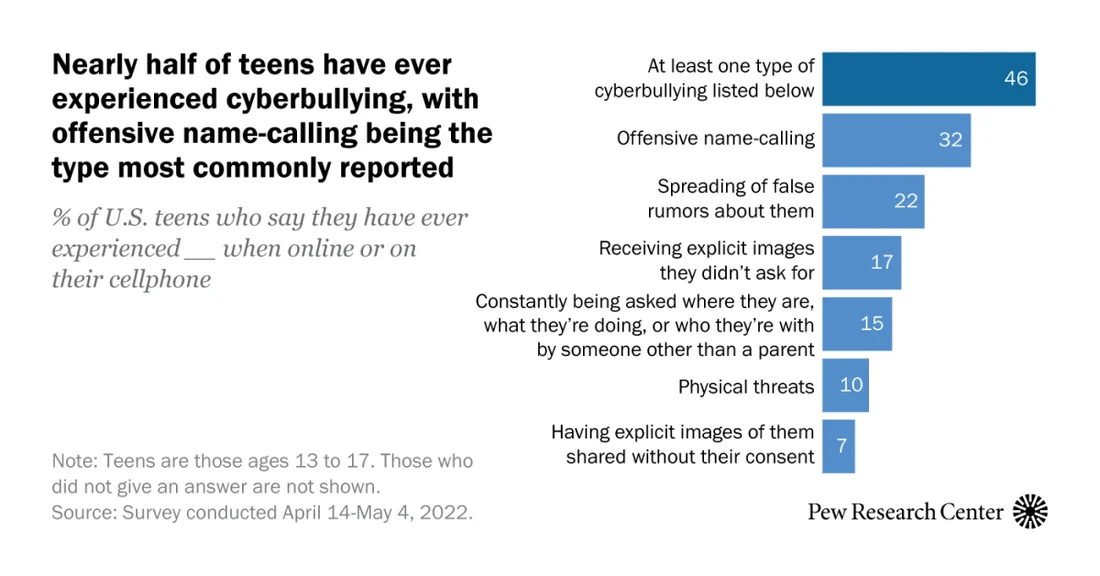
Pew's Teens and Cyberbullying 2022 survey found that 46% of US teenagers reported experiencing at least one of six named forms of online harassment. Name-calling was the most common single type, and more than a quarter of teens said they had experienced more than one type.
What the evidence says
The survey questioned 1,316 US teenagers aged 13 to 17 through an Ipsos online panel, fielded between 14 April and 4 May 2022, and asked about specific behaviours rather than a general question about being bullied. It found 32% of teens had been called an offensive name online or by phone, 22% had a false rumour spread about them, 17% had received unwanted explicit images, 15% had someone other than a parent constantly ask where they were or who they were with, 10% had received physical threats, and 7% had had explicit images of themselves shared without their consent. The survey asked about experiences online or on a phone generally, rather than attributing each incident to a specific platform.
For context
Naming six distinct behaviours, rather than asking only about bullying in general, tends to produce a higher reported rate, because teenagers may not label an experience as bullying even when it matches one of these categories. That makes the 46% figure a measure of how many teens experienced any of these specific things, not a like-for-like comparison with older surveys that asked a single broad question. The government resource StopBullying.gov defines cyberbullying broadly as harmful or false content shared through phones, apps, social media, gaming or messaging, which overlaps with several of Pew's categories without matching them exactly.
A practical next step
Instead of asking a teenager the general question of whether they have been cyberbullied, you could work through Pew's specific categories, name-calling, rumours, unwanted images, persistent unwanted contact, threats, one at a time, since a specific question is more likely to surface something a general one would miss.
- Has my teenager experienced any of these specific behaviours, even if they would not describe it as bullying?
- Do they know how to report or block on the apps and games they use most, and have they ever needed to?
- Who would my teenager tell first if something like this happened, and do they know I am a safe option?
The specificity of Pew's categories is its main strength here: it turns a vague worry about online meanness into a set of concrete behaviours that a family can actually ask about and respond to.
Sources & reading trail
Reports the survey's sample, fielding dates and the percentages for each named type of online harassment.
Source published: 15 December 2022 · Retrieved: 16 September 2026
Gives the US government's working definition of cyberbullying and the common venues where it occurs, used here for context on how Pew's categories relate to a general definition.
Source published: Not established · Retrieved: 16 September 2026
Studies and official documents establish the record; the short answer and the next step are Screens & Childhood editorial interpretation. This retrospective draft does not imply the site published on the event date.