
The short answer
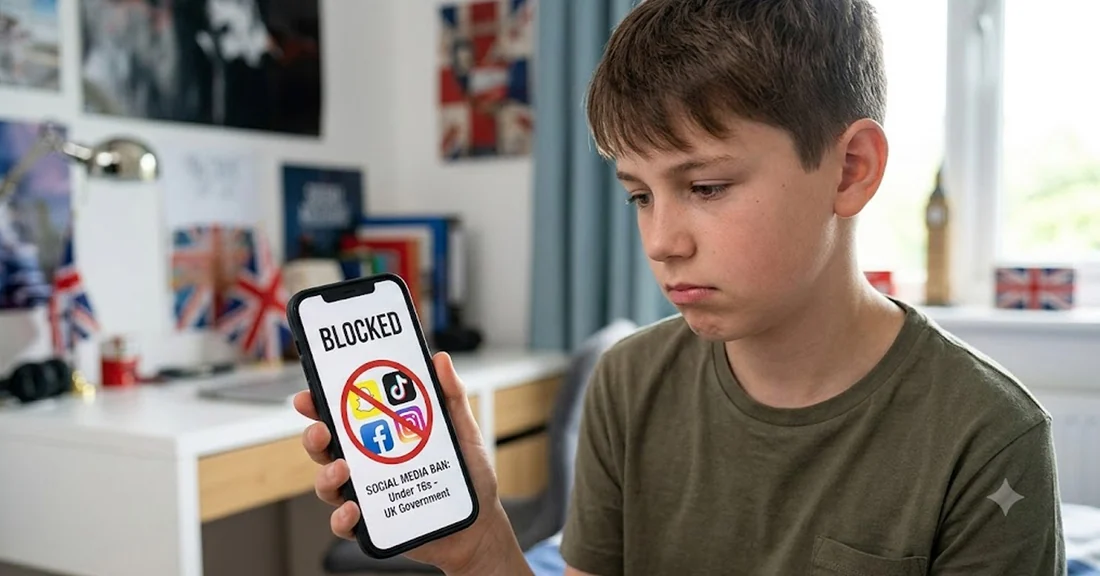
Ofcom's Children and Parents: Media Use and Attitudes Report 2024, published 19 April 2024, found that 51% of children under 13 report using social media, even though most platforms set a minimum age of 13. Most parents know an age limit exists, but far fewer know what it actually is.
What the evidence says
Ofcom carries out this research under duties in the Communications Act 2003 and the Online Safety Act 2023 to study media literacy. The 2024 report draws on its Children's and Parents' Media Literacy Tracker, three linked surveys covering children and young people aged 3 to 17, with data on children aged 3 to 7 reported by a parent or guardian rather than the child. The tracker's method has shifted over time, from face-to-face interviews between 2005 and 2019 to a mix of online and face-to-face fieldwork since 2020, a change Ofcom flags as affecting direct comparisons with older waves. On top of the quantitative tracker, Ofcom also runs Children's Media Lives, a qualitative study that has filmed the same 213 children aged 8 to 17 on camera each year since 2014.
Alongside the 51% figure for under-13 social media use, the full report records that 40% of 8- to 17-year-olds admitted giving a fake age to access a site or app, and that profile ownership among 5- to 7-year-olds rose year on year for YouTube or YouTube Kids (48%, up from 39%), WhatsApp (11%, up from 7%) and Instagram (9%, up from 5%). Only 32% of parents correctly identified 13 as the usual minimum age; 31% guessed 14 or older.
For context
A child using an app despite an age limit is not the same as that child being harmed by it, and the survey does not attempt to measure harm directly; it measures reported access and parental awareness. Because under-7s' answers come through parents, this section reflects what parents observe or allow rather than what a young child would say unprompted. The methodology change since 2020 also means Ofcom itself cautions against treating every year-on-year shift as a clean trend.
A practical next step
Rather than assuming a platform's age gate is doing the work, you could treat the minimum age as one input into your own decision, and check with your child what account, if any, they already have and how they came to set it up.
- Does my child have a profile on a platform with a minimum age they have not yet reached, and how was that account created?
- Do I know the actual minimum age for the platforms my child uses, rather than an assumed one?
- What would change if my child used an age-appropriate version of a service, where one exists, instead of the standard one?
Ofcom's tracker is one of the most methodologically detailed sources on UK children's media habits, and its value lies in comparing children's reported behaviour with what parents believe is happening, a gap the 2024 wave documents clearly.
Sources & reading trail
States the report's publication date, age range (3-17) and statutory basis under the Communications Act 2003 and Online Safety Act 2023.
Source published: 19 April 2024 · Retrieved: 16 September 2026
Provides the methodology detail (CaP tracker, COBA/COKU surveys, Children's Media Lives) and the specific findings on under-13 social media use, fake ages and parental awareness of minimum ages.
Source published: 19 April 2024 · Retrieved: 16 September 2026
Studies and official documents establish the record; the short answer and the next step are Screens & Childhood editorial interpretation. This retrospective draft does not imply the site published on the event date.