
The short answer
NAMLE, a United States nonprofit coalition working on media literacy education, defines media literacy on its own site as the ability to access, analyse, evaluate, create and act using all forms of communication. For a family, the practical use of that definition is a short list of things to do together with any piece of media, not a single skill a child either has or lacks.
What the evidence says
The organisation's definition page states the definition in full: the ability to access, analyse, evaluate, create and act using all forms of communication, adding a broader description of media literacy as the ability to encode and decode the symbols transmitted through media and to synthesise, analyse and produce mediated messages. The same page states that media literacy builds upon traditional literacy and offers new forms of reading and writing. NAMLE describes itself as a 501(c)(3) educational organisation and as a coalition of educators, faith-based groups, health care providers, and citizen and consumer groups. Its main site lists related resources built around this definition, including a separate Core Principles document, a set of Key Questions for Analyzing Media, an academic Journal of Media Literacy Education, an annual Media Literacy Week, a youth-authored guide called Your Media, Your Choice, and a newer AI Literacy Initiative.
For context
This is one professional association's working definition, not a validated, scored instrument. The five verbs describe an aspiration for what literate engagement with media looks like; they are not age-graded benchmarks, and the two pages reviewed here do not publish an assessment tool that measures where a particular child sits against them. Because NAMLE is a coalition of many kinds of member organisations rather than a single research team, its published framework reflects a consensus position built for educators, and the specific content of its Core Principles document was not available on the page reviewed here, so it should be read separately before being treated as settled detail.
A practical next step
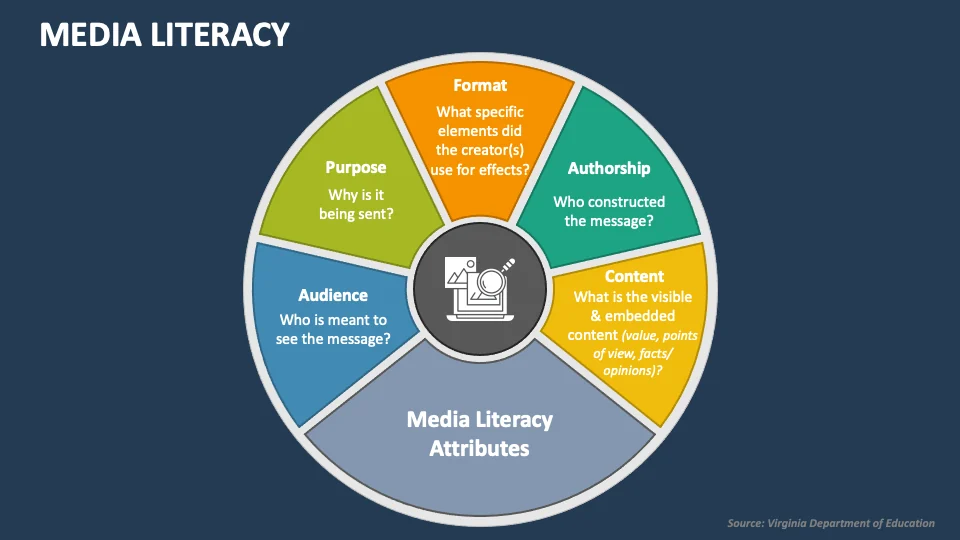
You could turn the five verbs into a short shared habit: after something your child watches, plays or reads, ask together who made it, why, whether it seems true, and what your child might make or do in response.
- Could your child say who made a specific piece of media and what they might have wanted from it?
- Does your family usually talk about media content out loud, or mostly consume it in silence?
- Is there a small creative or practical follow-up task connected to something your child engaged with recently?
NAMLE's definition gives families a shared vocabulary, access, analyse, evaluate, create, act, for a conversation that would otherwise stay vague. It is a starting framework from one association, not a measured test, and it works best as a habit practised together rather than a standard applied to a child alone.
Sources & reading trail
States NAMLE's five-part definition of media literacy, its broader encode/decode framing, and its 501(c)(3) coalition status.
Source published: Not established · Retrieved: 16 September 2026
Lists NAMLE's mission and related resources built around the definition, including Core Principles, Key Questions and its academic journal.
Source published: Not established · Retrieved: 16 September 2026
Studies and official documents establish the record; the short answer and the next step are Screens & Childhood editorial interpretation. This retrospective draft does not imply the site published on the event date.