
The short answer
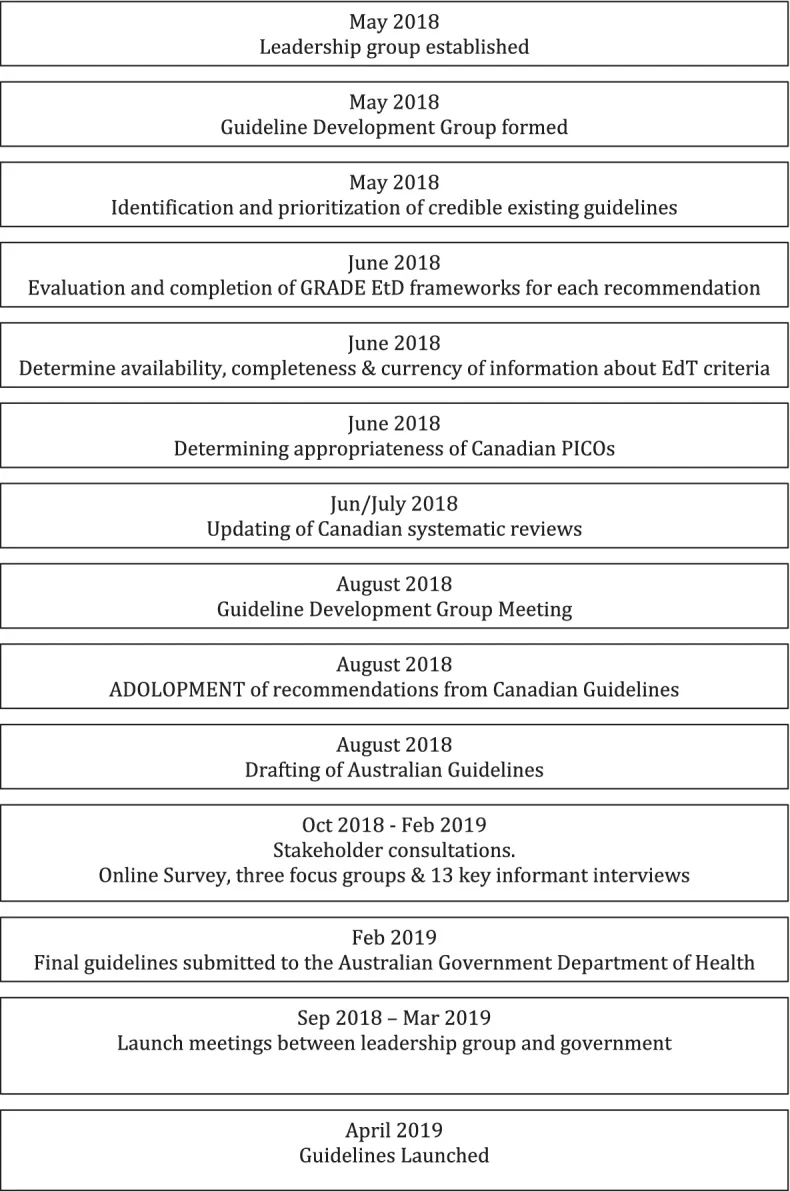
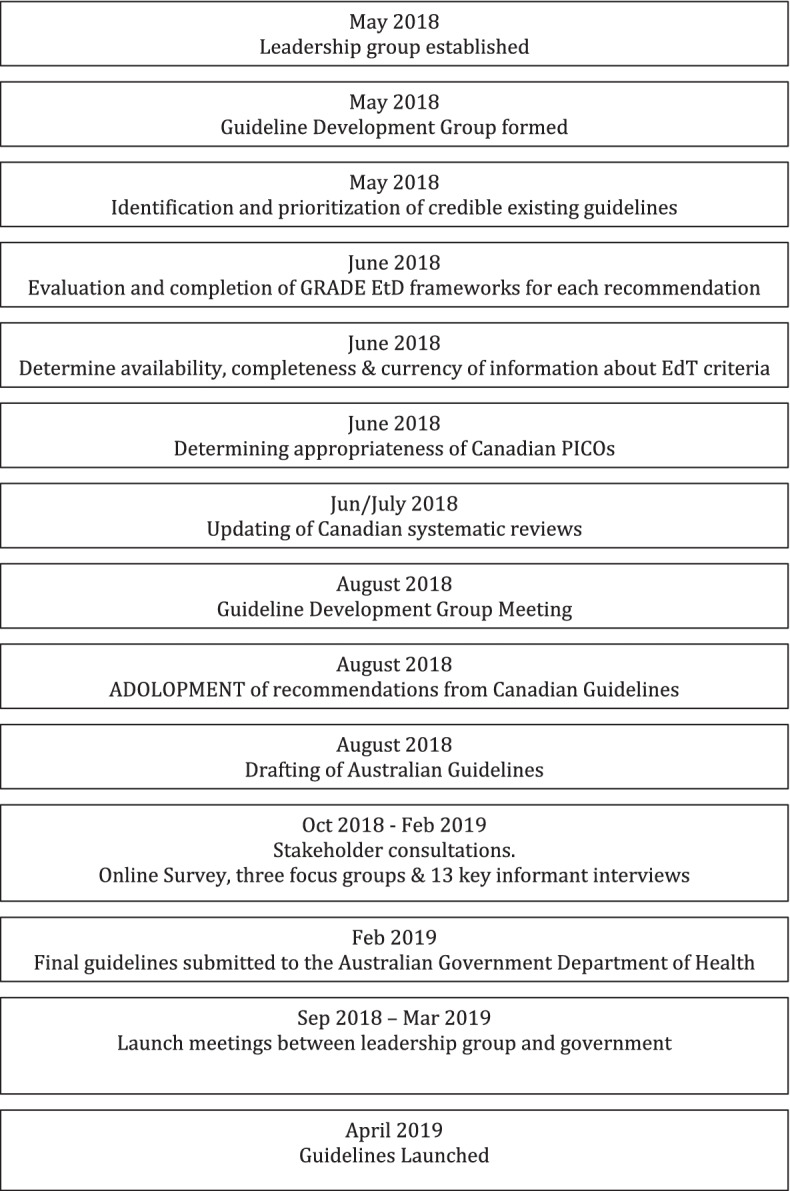
Australia's national movement guidelines did not start from a blank page. A guideline development group reviewed Canada's evidence and its own country's studies, then explicitly decided to adopt Canada's recommendations, including the two-hour daily limit on recreational screen time for children and young people, with only minor wording changes.
What the evidence says
A 2022 methods paper describing that process explains that Australia used the GRADE-ADOLOPMENT approach, a formal method for adopting, adapting or starting from scratch when building on another country's guideline. Having reviewed the Canadian systematic reviews and its own updated Australian evidence, the paper records that 'the Guideline Development Group agreed to adopt the Canadian recommendations and, apart from some minor changes to the wording of good practice statements, maintain the wording of the guidelines, preamble, and title of the Canadian Guidelines'. That recommendation, matching the one in Canada's own guideline, keeps the two-hour ceiling on recreational screen time. The same paper is candid about the quality of the underlying trials: assessed against GRADE, 'the evidence base was graded Low or Very Low in most cases'.
For context
This is a useful example of how guidance travels between countries. Adoption under GRADE-ADOLOPMENT is a documented methodological choice, a country judging that another body's review of the evidence is sound enough to build on, rather than a fresh trial reproving the same number. That is different from the United Kingdom's chief medical officers, who reviewed overlapping literature and chose not to set any number at all. Both decisions can be reasonable responses to genuinely thin evidence; they simply reflect different institutional judgements about what to do when the data will not settle the question on its own, which is worth remembering whenever two health bodies appear to disagree.
A practical next step
If you find a specific number useful as a household reference point, Australia's adopted two-hour figure is as good a professional anchor as most; just hold it loosely, since its authors themselves rate the evidence behind it as low or very low quality.
- Does knowing a limit was adopted from another country change how firmly you would apply it?
- Would you treat a 'Low quality evidence, strong recommendation' number differently from one rated high quality?
- What would your family do differently if two trusted bodies gave you different numbers?
A guideline built by adopting another country's work, openly and on record, is not a weaker document for saying so. It is more transparent than one that presents a number without explaining where it came from or how confident its authors really are.
Sources & reading trail
Full text describing the GRADE-ADOLOPMENT process, the decision to adopt Canada's recommendations, and the Low or Very Low GRADE ratings.
Source published: 6 January 2022 · Retrieved: 16 September 2026
Shows the Canadian two-hour recreational screen-time recommendation that Australia's guideline development group adopted.
Source published: Not established · Retrieved: 16 September 2026
Independently confirms the paper's title, journal and 6 January 2022 online publication date.
Source published: 6 January 2022 · Retrieved: 16 September 2026
Studies and official documents establish the record; the short answer and the next step are Screens & Childhood editorial interpretation. This retrospective draft does not imply the site published on the event date.